Thursday, September 26, 2013

Francesco Riverso Soccer Legend


Soccer is a game of speed and skill where goals don't come easy. They come from hard work, calculated team coordination and through shear talent and passion.

To score one goal is sweet, to score many is rare.

Francesco Riverso made scoring goals look easy. He was born into soccer and his passion for the game, like life, was a part of who he was...and it was contagious.

From a distance he seemed to be gliding, but to a defender, he seemed to be two steps ahead. If you weren't familiar with his skill, he was past you before you even realized he was there.  His eye was always on the ball and the ball was always on his foot. It was the creative intelligence of his trained mind that told his foot where to move the ball and no defender or goal keeper could keep up.  As a teammate who understood his talent it was fascinating and to anxious fans it was awe inspiring.

Ever humble, you would never have known that Cesco was a Hall of Famer. He was and is one of the most honest, caring and friendly people you'll ever meet. Like scoring goals, he has a knack for making other people feel important. He takes a caring interest in every person he meets and is focused and determined to help others succeed.

Thanks to Cesco, his Brother and his Father, the game I had struggled to understand and appreciate fully, I learned to play and came to love. 

For those of us who were lucky enough to witness these talents in person, we aren't surprised at his early induction into the Halls of Dolphin Fame.  He is as much an incredible person as he was a player. He defines LeMoyne principals and makes everyone around him better. The players, students and coaches who enjoy his company now, surely appreciate it, while his former teammates remember those days often and will treasure the memories forever....

This Saturday, Francesco Riverso will be inducted into the
LeMoyne College Sports Hall of Fame!

Congratulations Cesco!...

As teammates we are proud to have shared the field with you, as friends we are proud to know you.

~Ted

Francesco Riverso ‘02  | Men’s Soccer (1998-2001) One of the most prolific scorers in program history, Francesco Riverso left the program ranked second all-time in goals scored (41, currently t3rd), third in career points (97, currently t3rd) and fourth in career assists (15, currently t7th). Named the 2002 Rev. J.J. O’Brien Male Senior Athlete of the Year (the only men’s soccer student-athlete to have ever received the honor), Riverso earned All-NE-10 honors three times in his career. In his senior season, Riverso tied a program record for goals in a season with 18, ranking in in the top-ten in the NCAA in goals per game, en route to being named the NCAA All-Region First-Team. Riverso currently serves as the assistant coach in the Le Moyne men’s soccer program.

http://www.lemoynedolphins.com/sports/goldwave/news/20130716_halloffamerelease

Friday, March 8, 2013

Oh Say Can You See Syracuse


I wrote this in 2003 and things have only gotten better since then. I love this town!  Every city has it's problems/challanges but we don't need outside experts or silver bullets to tell us how good we have it.

Friday March 28th, 2003

I met a young girl the other day at a coffee shop in Hanover Square.  She recently moved back from Baltimore, where she went to college to study international business and management.  Originally from Liverpool, she now lives and works in downtown Syracuse, and is absolutely in love with her new setting.

I told her that I grew up here also, and live and work in the city as well.  I told her I shared her enjoyment of life here, and am excited to be a part of it's future.

She went on to tell me about her sister who lives in Chicago, where she moved after college so she wouldn't have to go back to Syracuse, and her brother who moved to L.A. because it was warm and he wouldn't have to deal with the snow.

The family had recently reunited in Syracuse for a wedding.  During their week together, they shared many laughs, tears, and memories. They also came to realize that they were eachothers closest friends and confidants. "How can we help eachother on a daily basis when we are so far apart?", she asked. Over the phone? email? That's not enough. That can't even come close to the feeling of a hug and a kiss, the spirit in a smile or a pat on the back."

The brother and sister have been back twice since that wedding last fall, and are both strongly considering relocating back home.  The girl almost started to cry, "I hope they go through with it", she said, "I miss them everyday."

Then she asked, "Why do so many young people go away in search of new opportunities before even  thinking of exploring options here?"

She wasn't just talking about her brother and sister, but also her cousins, some of the people she knew growing up, most of her best friends from high school.  While she was in Baltimore telling everyone how great Syracuse was, back home people were leaving like there was a plague coming.

I sensed a little anger, along with some sadness and lonliness in her voice, so I tried to reassure her. I told her the Central New York region was a hidden jewel waiting to be rediscovered.

She said I was crazy. I laughed and kept going. I told her that Syracuse, a city seen by many as bleak and unrewarding, is viewed by others as a place of dreams, of history, character and hope. A place where you can realize your potential and find the means to reach your goals. She said she had never heard anyone her age say anything like that about Syracuse, but she agreed.

The young people of Syracuse -- students, workers, professionals, artists, entertainers, etc. -- need to follow the example of some of our counterparts and take more ownership, finding solutions to many problems.  We are the ones who are relied on for stability in hard times. We are not going to leave home because life is easier somewhere else. We are going to stay, because we have challanges to face that will build our character and make us better people.

We are right to be sick of the mediocrity and conformity in our world and our city. We deserve better. Many of us could work anywhere in the world, but for many reasons we prefer to live and work right here.

Alot of young people complain about their situation in Syracuse. Some leave Syracuse to seek new opportunities. Where are you going? Away from a part of yourself, something that cares about you, something that needs you? Why?

In the next few years this part of the world is going to change dramatically. I look forward to it. There will be difficulties, tough decisions to be made. Everything will not go perfectly. But as we persevere, we will mold something great out of what we are given. We will embrace change and allow it to improve our community.

We must have talked for hours, this girl and I, mostly about life and the future. In the end what it came down to was pride. We know Syracuse has raised terrific people who have gone on to do wondrous things. People of honor and people of the strongest moral value. But what happened to pride?

It is time to create new pride for an old city. With this pride will return many of those who left. More important, it will give us a reason to stay. Those who feel that opportunity is only available elsewhere might stay and figure out how to make opportunities here -- for everyone.

We, the young adults of this community, need to carry the torch. After all, it is our future at stake. We are the ones with the energy, creativity, audacity and strength to make change, and we are the ones who will benefit the most. We will thrive everyday. our economy will grow, our debts and crime rates will shrink, our real estate base will expand. Houses will be full and neighborhoods will be clean. Energy and optimism will be contagious. It will spread throughout the country, and people and businesses will come from all over to be a part of it.

With all the money coming in, no one will be left out. All aspects of the region will benefit. Most importantly, we will do it together, as a community, proud of who we are.

We are approaching a great chasm. We can decide the distance is too far, turn and walk back to where we've always been. Or we can take a small step back, a deep breath, run and jump, knowing that if we don't land on the other side, we will have the strength to grab on to the edge and pull ourselves up.

Of course, if we all work together, we could build a bridge, linking the past to the future. It won't be easy and it will take some time. But we owe it to ourselves to try.

Thursday, January 24, 2013

Syracuse Real Estate Market Update!

Now is the time to seriously consider buying or selling a home!

Saturday, January 19, 2013

44! ~ It's Gonna Be A Great Day!


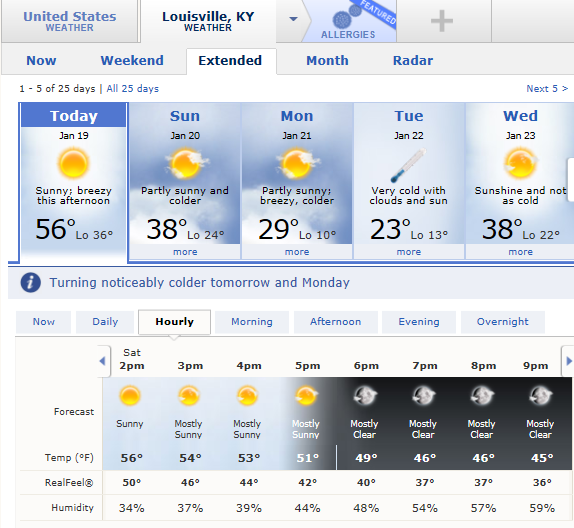
It's a beautiful day in the 'Cuse.  We started off the day by running 4+4 miles and believe it or not the temperature was a good luck 44 degrees.  It looks like we will be back at 44 just in time for tip off.
 

While the temperature in Louisville is expected to be a little higher, check out what the Real Feel temperature in Louisville will be at tip off...


It'll be a great game!. Good Luck! Let's Go Orange!


Tune In...

Real Time Updates from Syracuse.com

Sunday, January 13, 2013

Syracuse Pride! Goose Perez Continues to Inspire!


Ath-lete noun \ˈath-ˌlēt, ÷ˈa-thə-ˌlēt\: a person who is trained or skilled in exercises, sports, or games requiring physical strength, agility, or stamina.  
 
Another amazing story about "Goose" Perez, by David Figura of the Syracuse Post Standard, ran in todays' paper and on-line. The story is so inspring that I have to re-run it here. I hope all who read it will take away some of the pride and inspiration that oozes from it. 

I first met Goose on a soccer field at LeMoyne College in August of 1997. He was an amazing soccer player. He was an athlete. Not only did he have two legs at the time... they were two of the quickest legs I had ever seen in my life.   He had the ball on a string and his legs moved so fast you could barely see them. He also had a genuine interest in the people around him and helped all of us become better.  He was a mentor and a role model.  His passion for the game was intense and obvious.  I was proud to be his teammate.

Not long after his days at LeMoyne, his life changed forever.  Cancer has placed defenders is his path that most players would never get passed.  Just as he did on the soccer field, Goose has managed to overcome the defense and has the goalkeeper's knees shaking. He has fought hard and continues to be an outstanding athlete and role model...what an amazing story!

Thanks for the inspiration Goose!  Good Luck!


Post Standard Article by David Figura

Augusto "Goose" Perez determined to do his best at IPC Adaptive Biathlon and Nordic World Cup

Quitting just doesn’t seem to be in Augusto “Goose” Perez’s vocabulary.
The 40-year-old East Syracuse resident has battled cancer four times, recovering from yet another operation and six weeks of chemotherapy that ended Jan. 4.
Nevertheless, Perez, who had his left leg amputated in 2003, is scheduled to begin a series of seven races today at the International Paralympic Committee Adaptive Biathlon and Nordic World Cup in Cable, Wisc.
His goal is to qualify for the U.S. Paralympic Nordic ski team, a quest that began a year ago. He’s been training ever since. He readily admits the cancer treatment has affected his training and conditioning, but he’s determined to give it his best.
“I don’t have the burning talent, just the work ethic. I’ll be competing in all seven events,” he said, prior to a 15 -kilometer, cross country ski workout Wednesday at Winona Forest in Jefferson County.
Perez, who played soccer at LeMoyne College, sees competitive sports and working out as the best way to deal with the pain and frustration of his illness.
He was diagnosed in 2000 with soft tissue sarcoma at the age of 28, just as he and his wife, Brenda, were celebrating their first wedding anniversary. The rare form of cancer affects muscles, tissues, nerves and tendons which connect organs to his body.
Despite what initially appeared to be a successful treatment, the cancer came roaring back. In 2003, his doctor broke the news that he’d have to take Perez’s left leg off.
His response?
“I asked him how long I’d be in the hospital and he told me four days. I told him to take me on Tuesday because I have a graduation party I have to go to on Saturday,” Perez said, who added that he did indeed attend the party.


2013-01-09-jb-ski1_2.JPGPerez working out Wednesday at Winona Forest.


And the leg?
“I had it cremated. It’s in my basement,” he said. “I was attached to it for a little while.”
Perez, who at the time of the amputation was working at ARISE where he taught life skills to developmentally disabled children, was determined to move on and not let it affect his life. He eventually became passionate about wheelchair curling and gained a spot of the U.S. Paralympic Team for the 2006 Torino games. He later decided he wanted a more physical challenged and took adaptive outrigger canoeing, winning the 200-meter sprint world championship in 2009.
More than a year ago, he met some competitors on the Nordic ski team and decided he wanted to give that sport a try.
“I was just turning 40 and I decided if I didn’t try this right now – learning how to ski, how to shoot – that I’d never do it,” he said. “So I quit the other sports and after three months of abusing myself in training, I made the development team.”
However, the development team provides little or no stipends for its athletes. Perez does have a coach, though, who sends him workouts and monitors his progress. Otherwise, his travel, equipment and other expenses are out-of-pocket.
During the summer he has a custom-made mountain board on wheels that he trains in. He uses it, along with a hand-powered cycle, to compete in road races, including this year’s Empire State Marathon. During the winter, he works out in the snow on a custom-made “sit ski.” It includes a soft, comfortable, plastic seat mounted on a special metal frame, which all rests on a pair of cross country skis.
Going up hills on cross country skis that are attached in two places and don’t lift off the ground can present problems, Perez conceded before Wednesday’s workout at Winona.
“It can be rough. I just shorten my poling and increase the rate,” he said.
He also has a Garmin attached to the metal frame that helps him in his training.
“It helps me track my speed and distance, my cardio, how many calories I’m burning, my elevation – everything I need to know,” he said.
When healthy, Perez said he tries to train upwards of 27 hours a week – occasionally doing eye-opening workouts such as pull-ups with one of his 50-pound daughters hanging from his waist.
Perez and his wife have two children – 8 ½ year old twins, Ainoa and Iker.
“He’s a real inspiration for his children,” she said. “He tries to show that no matter what happens, he always has to try, no matter how hard it is. He keeps trying.”
Perez’s cancer and his training- related expenses, though, has undoubtedly caused a severe financial strain on the family. At this point, neither he or his wife are working – mainly because the cancer and the time involved in Perez’s care and taking care of the children, his wife said.
In 2011, Perez and his wife were charged with fraud in Onondaga County because they didn’t list $23,500 Perez received from the U.S. Olympic Committee on a Medicaid application. Perez got the money while working as a speaker and making appearances at training sessions and competitions. The Perez household received $19,873.91 in benefits it was not entitled to, officials said. Perez paid a settlement, he told the Watertown Daily TImes.
Undaunted, Perez remains determined to live life to the fullest.
Carolyn K. Rees, president of the Winona Forest Recreational Association said Perez offers an “inspiring message.” Jamie Wilson, ski chairman for Winona Forest, said Perez has been coming up to train at Winona several times a week since the snow first fell before Christmas.
“We’ve been maintaining the trails for him, packing them down, setting up tracks for him to ski. We support him,” he said.
Perez made no predictions or promises about how he’ll do during this week’s competitions – except for one.
“I’m going to finish every race,” he said.


2010 This Life on Fire Blog


Monday, September 17, 2012

Why an Australian loves Central New York and was happy to move here


Why an Australian loves Central New York and was happy to move here


Published: Sunday, September 16, 2012, 7:13 AM    
The Post-Standard
By Brian Humphreys

Post Standard Contributing writer

I moved to Central New York from my native Australia earlier this year. Since then, I've been surprised by how often I'm asked, "Why?"

What's surprising isn't so much the question itself, but, how it's asked. Almost without exception, people use a tone that (only half-jokingly) questions the wisdom of my choice. Why, they wonder, would I leave Australia, with its environment and lifestyle, to live here, when there are many other (better?) places to live in the U.S.? Los Angeles, New York or Orlando they could understand, but Syracuse?

When I tell them I moved here to marry an Oswego girl, that seems the perfect answer — it makes sense to them. The expanded story, though, confuses some. The fact is, I became enraptured by the charms of Central New York long before I decided to marry, so much so that I have happily traveled from the opposite side of the globe to visit here almost 30 times in as many years.
Sadly, it seems that quite a few locals are blind to the unique and wonderful life they have.
In the hope that more Central New Yorkers will see their world as I do, I thought I'd paint a word picture of the region.

In 1982, as an exchange student at Hannibal High School, the warmth of the people I met became the foundation of my love for this part of America. Yes, Australians are jovial and embracing, but Central New Yorkers displayed an infectious passion for life and a remarkably warming sense of community.

Earlier, movies starring Henry Fonda, Doris Day, Jimmy Stewart and Katharine Hepburn shaped my imagining of the United States. These celluloid characters portrayed a storybook America — a Capraesque world — where anything was possible if you only worked hard enough.

As romanticized as that may be, I found a considerable truth to that conviction in Central New York. For the first time, I had faith that, while the world is not always a fair place, the future remained mine to influence. The people in Central New York taught me what individual effort can deliver. They showed me too that life was to be celebrated; events from Thanksgiving and Christmas to Veterans Day and the Fourth of July were milestones of unmatched community togetherness.

This region's blessings aren't limited to its people; the climate is a gift also. The heterogeneous year presents a reassuring pattern to life, a rhythm that's absent in many other parts of the U.S. and the wider world. The dramatic changes of the season: to walk variously in flip-flops in July and knee-high boots in January and to take in a sky heavy with snow in winter and with cascading colors in fall are all to be cherished.

No matter the season, Central New York is a collation of vistas that could have inspired Norman Rockwell. Walk in any direction and you will come across scenes reminiscent of the America that graced the covers of the Saturday Evening Post. From the red, gable-roofed, Dutch-American barns that guard fields of head-high corn to the Colonial-Revival and folk-Victorian homes of the 1800s, from flagged-draped porches to manicured baseball diamonds. For me, the region is an imagined-America come to reality.

Even in everyday life, Central New York (and the northeastern United States in general) has some notable advantages over many other parts of the world. For example, food and clothing here are still far less expensive than in Australia. The value of housing is astounding; you get much more bang for your buck. My home in Oswego is twice the size — and on 10 times the land — of my former home in Australia, yet it cost one-quarter the price.

Now, I don't want to give you the wrong impression: I'm not criticizing my homeland at all; there are many wonderful things about life in Australia that I will always adore. Rather, I want to point out that there are many things in Syracuse about which its citizens can and should be proud.

I can't help but think the economic downturn of recent years has taken a toll on local optimism; that's unfortunate, indeed. Because, as an outsider — one who spent many years looking in with envy — I believe Central New Yorkers have abundant reasons for optimism.

Central New Yorkers should be optimistic because they are well-positioned to prosper as the global economy recovers. They have the people, well-educated individuals and strong community, a bountiful regional environment and advanced industries able to expand exports of valued products and services.

As a globe-hopping Aussie, I've found the very best of America and the world right here in Central New York.

Brian Humphreys is the director of marketing and communication manager at Saab Sensis in East Syracuse. He is a former director general of public affairs in the Australian Department of Defense and an author on international security and defense matters.

Friday, July 20, 2012

Syracuse Real Estate Market Update!!!

I know this may not be the best news for buyers who were hoping to get a great deal on a home, but at the end of the day, market stability is in the best interest of everyone and will result in a stronger economy and community!

Monday, January 2, 2012

How did Syracuse get it's name? ~History Bridge~


I'm sure that many people are wondering...How did the city that, among it's many achievements, boasts the #1 hoops team in all the land, come to be called Syracuse?

...

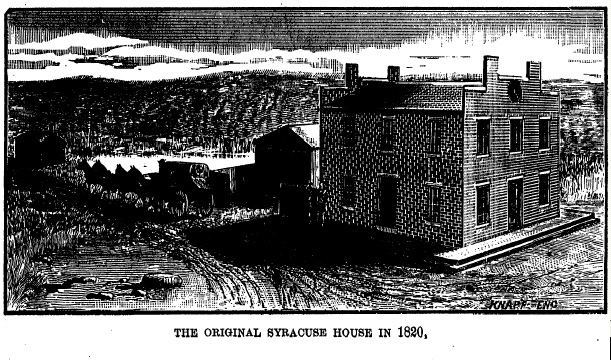
In 1819 Joshua Forman and John Wilkinson engaged with others in the community to determine what their growing town's eventual name should be.

The village, whose primary landmark was The Old Red Mill, had first been called Bogardus' Corners after a tavern located at what is now the northwest corner of Salina and Genesee Streets; then later referred to as Milan, South Salina, and finally, Cossitt's Corners .

Joshua Forman, a man highly respected by the community, came up with the name Corinth, because it brought to his mind a pleasant and historic old world city.  For a time this settled the issue, and Corinth was accepted as the name...

Then John Wilkinson applied to the federal government for two things: a post office for Corinth, and his own nomination as postmaster.  The second request came through.  Wilkinson became the postmaster.  But Corinth was rejected as a name, because it had already been claimed by another village in New York State.

A chance moment of leisure in a waiting room in New York City in 1820 finally put Wilkinson on the right track. Thumbing through a periodical, he came upon a poem.  It was titled "Syracuse".

The verse described a community in Sicily with a nearby lake where salt and fresh water mingled. It had a nearby town called Salina.  The statesman, Marcellus and Cicero, were mentioned by name.  And as the final coincidence, the measurements of Syracuse, Sicily and Corinth, New York were identical...one mile long and half a mile wide!

Another literary comparison could be found in a French book published in 1666, which likened the Lake of the Onondagas to that of the Syracuse in the Mediterranean.

Wilkinson and his fellow townsman knew that they had found their name...

               "Syracuse"


Source: "They Built A City" 1976 William F. Roseboom and Henry W. Schramm

Tuesday, July 19, 2011

Leaving the San Francisco Bay area for the ground floor of something big in Syracuse


Saturday, July 16, 2011 ~ Post Standard ~ Syracuse, NY


Every time I say it, the truer it becomes: the Syracuse of today is not the Syracuse I moved to in 2004. I marvel at the positive changes that have taken place in this city since my husband and I packed up our Oakland, Calif., apartment and rolled into Syracuse seven years ago this week. We relocated here for work and were lured by the promise of “amazing things on the horizon” as Syracuse University welcomed its new chancellor, Nancy Cantor. In places like Berkeley or New York City (where I was raised), a new leader of an educational institution would hardly be news. But here in Syracuse there was a deep desire for reconnecting Syracuse University to its namesake city and, perhaps, connecting neighborhoods and people one to another.

It sounded exciting at the time. Our friends thought we were crazy — who would leave the San Francisco Bay area with its perfect weather, world-class restaurants, and endless opportunities for cultural enrichment for Syracuse? My new colleagues at Hendricks Chapel reassured me that I was coming in on the ground floor of something big. Syracuse was where Portland, Ore., was 30 years ago. And I love Portland.

The summer of 2004 found us explaining and justifying our move to everyone — including Syracusans. Looking back on it I can see why our judgment would be questioned. This was before a downtown apartment was the hottest ticket. This was before we had small neighborhood farmers’ markets selling delicious local produce, cheeses and sustainably-raised meats nearly every day of the week. This was before The Warehouse expanded our downtown view westward. This was before Syracuse became a destination for major sporting events like the half Ironman triathlon and the national women’s bowling tournament. Five years ago the idea of having your choice of artisanal, local coffee roasters on the West Side would have been laughable. Not today.

I used to worry that the changes I witnessed were just the icing on the cake. All the attention going to the aesthetics that would make Syracuse a desirable place to live for the young urban professionals or creative class that the city seemed so desperate to attract and retain — while the cake itself failed to rise. Meaning, the large and growing underclass that couldn’t get out of the cycle of poverty and inadequate education to be part of the “eds and meds” and biotechnology boom that was becoming the new foundation of our economy.

Initiatives like Say Yes to Education, targeted recruitment in underrepresented communities by University Hospital’s education and training programs, and deep investments in our poorest neighborhoods on the south and west sides give me hope. There is so much work to be done, but no one can say we’re not trying — not anymore.
In a world where the smart phone you buy today is outdated tomorrow, seven years is still an incredibly brief time to see the changes our city has undergone. The only problem with such rapid change is that now I have expectations. It is impossible for me to stroll the undulating Creek Walk through downtown and not dream about the day when an elevated interstate highway will no longer bisect our city. The Creek Walk was a long time coming too, and though it isn’t perfect or complete, it is certainly worth the wait. I hope and trust that I will be able to say the same about the Connective Corridor street improvements now under construction.

I have come to love my adopted home with no sign of the dreaded seven-year itch. And no, I don’t think it is overreaching to dream of the day when people will call Portland the Syracuse of the west. That day may be closer than we think.

By Jennifer Baskerville-Burrows, Contributing writer for the Post Standard

Jennifer Baskerville-Burrows is rector of Grace Episcopal Church and Episcopal chaplain at Syracuse University. She is also the creator of the food blog, Cookin’ in the ’Cuse. She is an occasional guest columnist for The Post-Standard.

Photo by Dick Blume, Post Standard

Monday, May 16, 2011

"A Magical Time In Syracuse"


Following the 10 mile Mountain Goat Run in Syracuse...
Sean Kirst's column is a must read for those who wake up in the 'Cuse and for those who admire her from afar.


The Mountain Goat: Running for all the right reasons


Sunday's Mountain Goat Run was 10 miles long, emphasis on long, on a course that rolled up some of the toughest hills in Syracuse. By the time you hit the last uphill at Thornden Park - unless you’ve got an elite runner’s disposition - you may have been asking yourself why you did this thing.
Yet the hill is quickly gone, and the worst is over. Before long, at the finish line, the answers become clear.

You do the Mountain Goat for the older brothers who’ve inspired you: The brother you lost, a tremendous runner in his day, and the brothers you’ve still got, who like you are out there running.

You do the Goat for your kids, just so they know the machine doesn’t need to shut down once you’re 50.

You do the Goat for your wife, who’s always tolerated your strange runs to strange places at all hours of the day and night. You do it for other Central New Yorkers who share the same passion, the ones on the turnpike in all kinds of crazy weather, the ones who understand what it means to be “out there.”

You do it for sweet and sudden flashes of memory, because the scents and sights of a long hard run can abruptly give you back childhood images that seemed forever lost.

You do it for everything you love about your city, for the great views from the hills on both sides of the valley.

You do it because the Goat merges with a magical time in Syracuse, that fleeting window when magnolias explode and maple leaves burst open. Somehow — on city streets — you become a part of that.

You do it for the folks who created this run and for the ones who keep it going, true believers who appreciate what makes this town unique.

You do it because a decade ago you could not run two miles, and this race reignited something that you thought you’d lost.

You do the Goat for what it says about the seasons, for the way you start training in March — when you wear long johns as you slog through wet snow — knowing that by race day the weather will take a glorious turn.

You do it for your parents, who died all too young, behind your hope that being out there might improve the chance for you to someday see your own grandkids.

You do it for the energy you feel along the route — the folks who bring live goats to the race, the little kids who slap your hand as you near East Colvin Street, the mysterious authors of chalk slogans on the hill at Thornden Park.

You do it for the chance to see the regulars, the stalwarts who run the whole way in bare feet, the guy who does the race dribbling a basketball.

You do it for a different look at the mansions of West Onondaga Street, or the roundtop at Onondaga Park, or downtown landmarks on those seemingly endless blocks before the finish.

You do it for friends and family along the route who call your name, for the men and women in church clothes who smile as you pass by, for the keyboard guy who plays “Great Balls of Fire” just when you need it most.

You do it for all your friends running the race for the first time, because you remember what that represents.

You do it because you’re at a point in life where your only competition is yourself, when you race against the time you had a year ago, which amounts to shaking your fist at Father Time.

You do it for anyone toying with the idea of the Goat, folks who are tempted but who tell themselves it cannot be done, because you remember feeling exactly that way.

You do it for the little pleasures at the finish, where bananas and apples have never tasted so sweet.

You do it because the race is so fitting to the ancient homeland of the Onondagas, whose Iroquois name, after all, equates to people of the hills.

And you do it for the triumphant embrace of old friends afterward at Clinton Square, that rare moment when no one is worried about sweat.

Beyond all else, you do it as affirmation for all those hours in the middle of nowhere, running in search of something hard to express.

You do it for everything you take from the Goat, because in some deep way — for yourself and for your town — it speaks to hope.

~ Sean Kirst

Friday, April 15, 2011

How much is a Syracuse home worth?

5 Steps to Deciding How Much to Offer – or Ask – for Your Home


One of the hardest, most important decisions homebuyers face is how much to offer for their home.  And the glut of information on the web about real estate only makes buyers even crazier than the decision itself does.  Supply, demand, foreclosure rates, mortgage rates – buyers think they need to run spreadsheets and do fancy math to make a smart offer.  And THAT can be super intimidating.
But the fact is, there is a pretty short list of steps you need to take to make a smart offer – one that gets you a great value, but is also likely to be successful at getting the property. (A low offer does not make for a great deal if you don’t get the house!)  And most of the same steps apply to sellers trying to set the list price that will lure the most buyers (and net them the most cash)!

Step 1: What do the “comps” say?  First things first. When it comes to pricing a home, or making an offer to buy one, the ‘first thing” is the home’s fair market value. Both buyers and sellers should work with an experienced, local agent to understand what the home’s value is. Most agents will do this by offering you a look back at similar properties that have recently sold in the neighborhood – i.e., the  comparable sales, or comps. HINT: You can also find comps for a home listed on Trulia by scrolling down to the section labeled Sold Homes near 1234 Merriweather Lane on the property's Trulia listing page.
Ideally, look for comparables that are very recent sales (3 months or less before you’re listing or buying), very similar properties (i.e., same number of bedrooms, bathrooms, square footage; and similar style, condition and amenities). If you do get into contract, these may be the same comparables which will be considered by the appraiser, so looking at them before making an offer can:
(a) provide factual support for a lower-than-asking offer or for the asking price, in a negotiation, and
(b) result in a sale price at which the property will actually appraise, later on - avoiding the common glitch of the deal falling through because the appraisal comes in way below the agreed-upon price.
Also, looking at comps is the first step for locating a home’s seller and prospective buyer in the reality-based universe of current home values.  The fact that you bought or refinanced the place at a given value 5 or 6 years ago is entirely irrelevant to what it’s worth today, as is the buyer’s belief that the place was worth $100K less at the trough of the market, in 2009.

Step 2:  What can you afford?  This step is much more critical for buyers than for sellers. (Unfortunately, sellers, the facts that you need to net a particular amount to buy your next home or pay your existing mortgages or credit card bills off has no relationship whatsoever to the price at which you should list or will sell your home.)
Buyers – it’s a must to make sure that your offer price for any given home falls within the range of what is affordable for you.  This includes offering a price within the range for which your mortgage was preapproved, but also includes making sure that the monthly payment and cash you’ll need to close the deal (down payment + closing costs) are affordable in light of the particular house. If, for example, the property will require repairs for which you’ll need to conserve cash, or has HOA dues you hadn’t planned on, you may need to rejigger your offer accordingly.

Step 3: What’s your competition? (And what’s theirs?)  This is another step at which it’s critical to check in with your agent. You need to know what level of competition you’ll face – whether you are a buyer, or a seller.  As a seller, you can find this out by looking at things like how many comparable homes are listed in your town or your neighborhood in your general price range (your agent will brief you on this).  Sellers should also consider what type of transactions their home will be up against – the more distressed properties (foreclosed homes and short sales) with which your home must compete, the more aggressive you must be with your pricing to get your home sold.
The more competition you have, as a seller, the lower you should tweak your list price to attract buyers to come see your home. (And the more buyers come to see your home, the more likely you are to get an offer!)
Buyers should also be cognizant of the competition level they will face for homes.  Believe it or not, even on today’s market there are properties and neighborhoods in which multiple offers are the name of the game. Work with your agent to understand the list price-to-sale price (LP:SP) ratio , which lets you know how much under or over the asking price properties are selling for in your target home’s neighborhood; the lower the LP:SP ratio, generally speaking, the less competition there is among buyers. 
Your agent can also brief you on:
(1)  (1)    The number of offers – if any - that have been presented on “your” property (which the listing agent will usually, gladly tell).  If there are other offers, you’ll want to make a higher offer to compete successfully against them; and
(2)    (2)  The number of days the home has been on the market, relative to how long an average home stays on the market before it sells – the longer it has, the more pressure is on the seller, price-wise, and the less competition the buyer is likely to have.  (One exception is the sweet spot scenario, when a property that has been on the market for a long time has a price reduction and gets a bunch of offers as a result! )

4.  How much do they need to sell (or buy) it?  Buyers: Has the listing in which you’re interested been reduced at all?  By how much?  Has the listing agent informed you that her clients are highly motivated, flexible or have an urgent need to sell?   
Sellers – most buyers are not in a high state of urgency to buy these days, given the long-term, high affordability of homes and interest rates, except when they have an urgent personal reason for moving, e.g., buyers who are relocating for work.  Of course, all of real estate is hyperlocal, so it’s important to understand how motivated buyers are in your local market, generally speaking, before you set your list price.
Trulia’s new, interactive Trulia's Price Reductions MapPrice Reductions Map offers a number of clues to critical indicators of buyer and seller motivations in your home’s town and zip code, in just a click on the map - including:
·         how many homes in your target property’s area have had at least one price reduction,
·         how likely a home in the area is to have multiple price reductions.
The higher these numbers are, the stronger of a buyer’s market it is, and the more bargaining power buyers likely have.   And if you’re the seller, the higher these numbers are for your area, the lower you may need to price your home to be successful at getting it sold.
5.  How much do you want to buy, or sell, the place?  Step #4 was about taking the motivations of the folks on the other side of the bargaining table into account when formulating your offer and your list price.  This step is all about you – what’s your level of motivation?  Now, buyers, you certainly shouldn’t offer a price way above what the place is worth (see Step #1) just because you really, really want it, unless you have the cash to throw around.  But within the range of the home’s fair market value, it may make sense to move higher within that range if you are highly motivated to get that particular property.
Sellers: think of your list price as the most powerful marketing tool at your disposal. if you really want or need to sell, get aggressive about setting your price as low as makes sense for your your home's value and local market dynamics to attract qualified buyers and help your home stand out against all the competition.
Tara-Nicholle Nelson

Wednesday, February 16, 2011

In Pictures: America's Best Places To Raise A Family


What a great place to live!

Forbes No. 4: Syracuse, N.Y.

Cost-of-Living Rank: 11
Crime Rate Rank: 13
Commuting Rank: 9
Household Income Rank: 72
Home Ownership Rank: 47
Homeowner Costs Rank: 20
Education Rank: 6

http://www.forbes.com/2010/06/04/best-places-family-lifestyle-real-estate-cities-kids_slide_8.html

Thursday, January 27, 2011

50 Ways To Spend A Snowday!


Enjoy the snow!

NEW YORK (AP) — Another day, another blizzard. Here are 50 ways to spend a snow day.

Make an abominable snowman. It's like a regular snowman, but less friendly to passers-by.
Practice multiplication and script with your kids. That'll put them in a REALLY good mood. For older kids, break out the practice tests.
Delete all of the expletive-laden "music" from your teenager's Napster playlist on the family computer, while she's not looking.
Make snow ice cream, slushies or 'tinis. Harvest icicles for the latter.
Put on your fanciest evening dress and jewelry, grab your cocktail and pretend you're in an old movie. That sounds a lot better than, "Sit around your apartment and get wasted."
Fill squirt bottles with water and food coloring and make art on the snow. Let your dog help out.
Trudge around town for a store that hasn't sold out on sleds.
Wash the floors by hand. Or use a toothbrush.
Do that mending and ironing you've been putting off since 2004.
Groom the dog. Then suck all the fur off your couch.
Make freeze-ahead dinners. The ones you wish you had right now.
Go rooftop luging.
Get kids the Lil' Capt. Robert Scott Antarctic Expedition playset.
Shovel through piles of climate change theories.
Shred your pile of old documents. Better yet, multitask. Use them to light up the fireplace.
Change the batteries in the smoke detectors, since you forgot during Fall Back.
Find all the lids to the Tupperware.
Play Monopoly with the rules that make the game go slower.
Go through your junk drawer. Do not be afraid.
Clean your silverware and jewelry. Alternatively, pine for silverware and jewelry worth cleaning.
Sort mementos into keep and toss piles. Spend time poring over the keepers — after all, that's why you're keeping them.
Make a master calendar for gift-giving dates. Shop ahead online. Or for yourself. Pretend there are sales.
Invite over neighbors you rarely see for a potluck dinner.
Make a list of all the things you love about your valentine for a card or scrapbook. Make stuff up if you have to.
Actually use those cross-country skis, or skates or showshoes you were always planning to try out after a big snow. C'mon, you can do it!
Scan old photos and make a photo book. Then force the kids to look at pictures of their parents when they were little.
Do your taxes! April 15 only feels far off.
Chug a shot and break open your financial portfolio.
Order seeds and plants for your spring garden. Yes, spring will come eventually.
Update your resume. Hey, it's better than doing it at work and leaving it in the copying machine.
Go through clothes in drawers and closet. Try on and toss.
Upload your CDs, finally. Now, this may be difficult: Toss the CDs and the CD player.
Take out all the beach chairs, umbrellas and boogie boards and make a beach day in the snow.
Google yourself.
Collect all the pennies from the corners of the house, coat pockets, sofa cushions, jeans in the laundry. Maybe you'll have enough for a cup of coffee at Starbucks. Then again, maybe not.
Write a letter. You know the kind, with pen and paper.
Make snowflakes out of paper. Tape them to your windows to block out the white piles outside.
Teach haiku — five, seven, five — and make a book of illustrated snow haiku.
Create air fare alerts for deals to your dream destinations.
Play this fun game with your kids: Let's Clean the Bathroom!
You know that neighbor who won't stop blasting music? That's where your shoveled snow goes.
Play family-friendly spin the bottle with your chore list. Hope it doesn't point to you when it's time to clean toilets.
Mani-pedi, scrub or mask, deep condition. You choose the body parts.
Bubble bath. Turn down the lights, light a candle and pretend you're in a spa. Doesn't do it for you? It's not completely impossible that a real one is open.
Experiment all day on devising the ultimate chocolate chip cookie. Tasting mandatory.
Begin your memoirs.
Take pictures of all your belongings to inventory for insurance. Now do a written inventory.
Sleep. If that doesn't work, make some nookie!
Send hate mail to your friends and relatives in warm-weather places. Or block them on Facebook.
Look at Florida real estate online, so you never have to read this again.

http://blog.syracuse.com/entertainment/2011/01/50_ways_to_spend_a_snow_day.html

Thursday, January 13, 2011

I was a fly on the wall at a funeral I'll never forget


It was a funeral which celebrated Syracuse and the incredible life of Mayor William Walsh. 

Cities are built like Lives...with passion, hard work and determination. 

Mayor Walsh was a man of integrity who gave his life to raising his family and to building up our community.

He was driven, not by his ego, but by a strong commitment to a city that he loved. 

We are lucky to have such a wonderful example of leadership, which no doubt, if followed, will bring us continued growth and success.


William Walsh was the Mayor of Syracuse from 1961 - 1969.
He served as United States Congressman for 3 terms starting in 1973.

"In the end he was who he was raised by his parents to be
– a good and gentle man.”

Rest In Peace

http://www.syracuse.com/news/index.ssf/2011/01/family_syracuse_says_goodbye_t.html

http://www.syracuse.com/news/index.ssf/2011/01/william_walsh_former_syracuse.html

Sunday, January 9, 2011

"Syracuse is steeped in an irreplaceable sense of place and cohesion difficult to find elsewhere."


"There is as much sense of belonging, more nostalgia, more accumulated aspiration, more embodied history and remembered purpose in the drumlins, streets and neighborhoods here as in any other spot in this nation."

Syracuse Post Standard 1/8/11

To the Editor:

Sean Kirst’s columns are always a treat, and his Dec. 29 piece recollecting his 20 years in town brought tears to my eyes.

Many of us have marveled from the same views he described. From the panorama atop Woodland Reservoir on South Geddes, and from Schiller Park’s intimate vista down upon the church spires and chimney smoke plumes, I’ve also said to myself, my hometown.

I arrived too, 33 years ago for social work graduate school, and stayed. And stayed and stayed. The more I’ve learned of Syracuse past, the deeper and richer my connection has grown to the people, organizations, architecture, the lands, lakes and woods of home. I’ve grown roots

We may be a struggling, Rust Belt, has-been city, but by God, there is as much sense of belonging, more nostalgia, more accumulated aspiration, more embodied history and remembered purpose in the drumlins, streets and neighborhoods here as in any other spot in this nation. From our native predecessors who worshipped our lake to the nation-building laborers whose work still stands, from Jermain Loguen’s abolitionists to the anti-war/social justice tradition recognized the world over, from three centuries of lacrosse to Syracuse University’s latest undefeated basketball squad, Syracuse is steeped in an irreplaceable sense of place and cohesion difficult to find elsewhere.

Kirst captures what a lot of us feel. Thanks for his eloquence.

Gary Weinstein
Syracuse

http://blog.syracuse.com/opinion/2011/01/sean_kirst_column_captures_aff.html

Sunday, January 2, 2011

Syracuse is...Creative Talent Improving And Becoming Competitive At The Highest Level


If the last few days have been any indication...Syracuse, in general, is headed for a spectacular year.

Syracuse University athletic teams have been remarkable as of late in the national spotlight and could be viewed as a metaphor for whats happening here as a community: 

Creative Talent Improving And Becoming Competitive At The Highest Level.

We'll keep the support and momentum going and will enjoy watching each other succeed.

Happy New Year!